
DustFall · Additional · Guide
DustFall Features — Terrain Physics, Six Ruins and Three Endings
DustFall features from the store page: destructible pixel terrain, oil and powder reactions, payload builds, the surface scan, six ruins and three endings.
By the Gamebase team · Updated 2026-10-08
On this page (13)
- The Feature List at a Glance
- The Terrain Is Your Weapon
- From a Single Shot to a Disaster
- Constant Descent Pressure
- Six Buried Ruins
- Endings, Cataclysm Mode and Store Features
- What Is Not Published
- What are the main DustFall features?
- What makes the terrain different from other shooters?
- What is the three-way upgrade system?
- What is Cataclysm Mode?
- How many layers and bosses are there?
- Are there other game modes?
DustFall features break into five official groups: destructible pixel terrain that doubles as a weapon, payload-and-upgrade roguelite builds, constant descent pressure from the surface scan and its hunters, six buried ruins each with a core boss, and three endings plus a Cataclysm Mode. Every one of those comes from the store page copy, and the page names nothing beyond them.
The Feature List at a Glance
The closing bullet list on the store page is the cleanest statement of what the game promises. It is short, and each line maps to a section further down this page.
| Published feature | What the store page says |
|---|---|
| Terrain | Fully destructible, simulated pixel terrain |
| Builds | Roguelite builds with freely combinable payloads and upgrades |
| Pressure | Constant descent pressure from the surface scan and alien hunters |
| Structure | Six layers and six core bosses |
| Endings | Three endings, plus Cataclysm Mode after the ending |
The store description splits the same material under three headings — THE TERRAIN IS YOUR WEAPON, FROM A SINGLE SHOT TO A DISASTER and SIX BURIED RUINS — which is a useful way to read the feature set in order of importance.
The Terrain Is Your Weapon
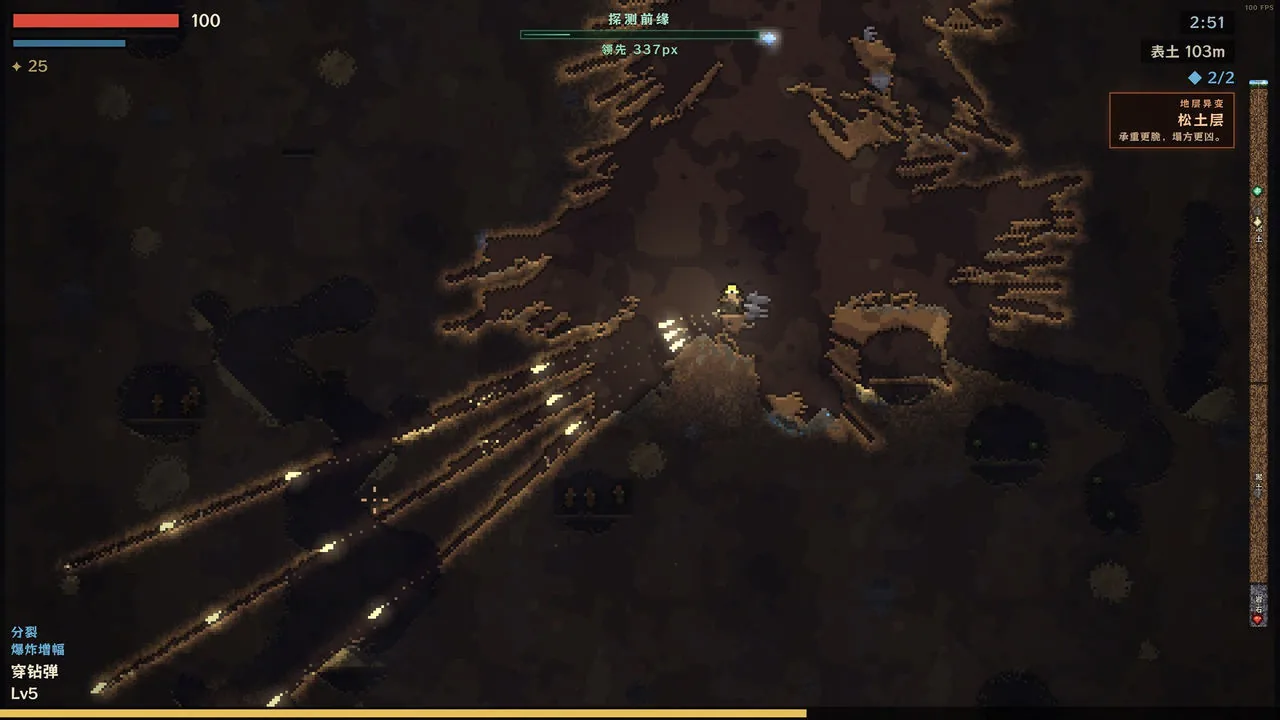
The underground is made of pixels that flow, burn, explode and collapse, and the page gives three concrete reactions rather than describing them in the abstract. Ignite oil and let fire spread through the terrain. Detonate powder caches to blast a route through solid rock. Remove crucial supports and bring a collapse down on your enemies.
The intended consequence is that digging is a tactic, not travel: every tunnel you carve and every cavity you blast open changes the battle and your escape route. The same feature carries the risk, because the store page warns that every act of destruction may open a path to survival, or bring an entire ruin down on top of you.
From a Single Shot to a Disaster
Build variety is described as combinable parts. You choose starting payloads such as the Drill Round or Grenade, and then shape the build through three-way upgrades during each descent: enhance your weapon, gain passive abilities, or switch payloads.
Two payload names are published as examples, and no count is given for payloads or upgrades. What is clear is the shape of the choice — one weapon direction, one passive direction and one payload direction per decision — and that the parts are meant to be freely combined inside a single run.
Constant Descent Pressure
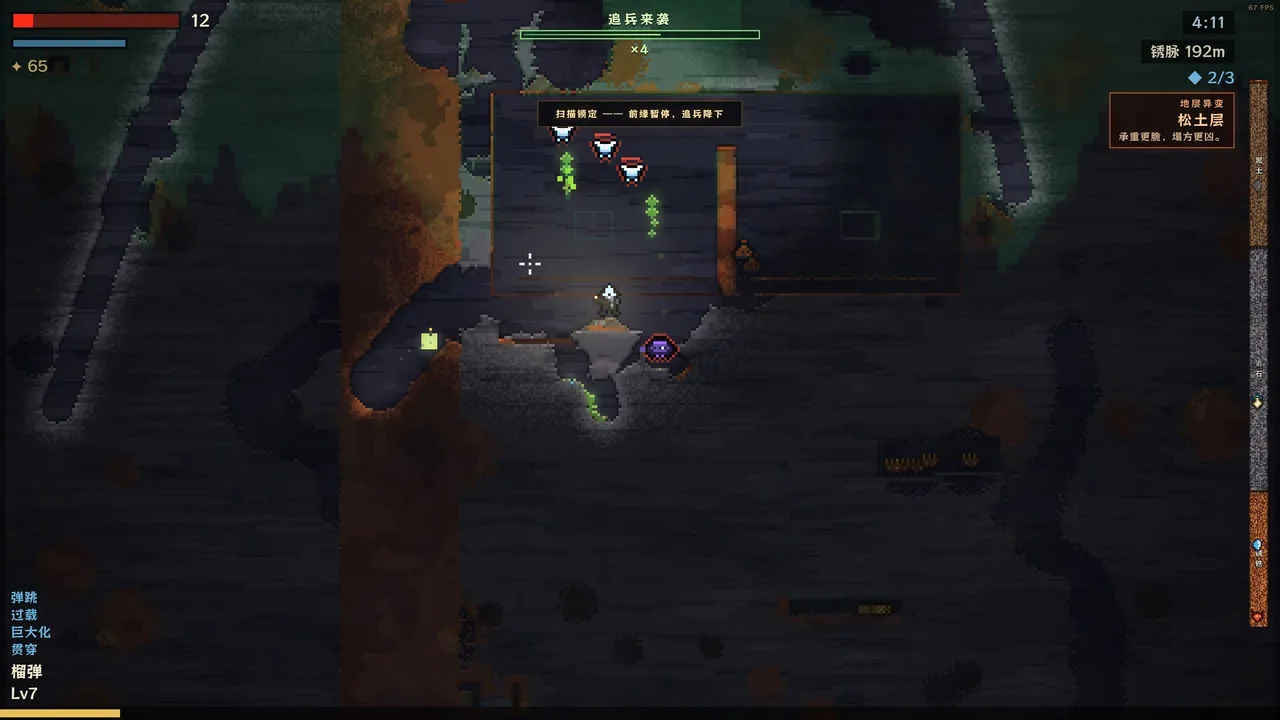
The pacing feature is a scanning front rather than a timer. At the start of every descent, the surface scan begins to close in. Stay too close to the upper layers and you will be detected, drawing increasingly dangerous hunters. Dig beyond the scan’s reach to earn a brief moment of safety.
The result is a game that pushes you down for reasons other than curiosity. The feature list calls it constant descent pressure, and the mechanic behind that phrase is spatial: danger scales with how close you stay to the surface, and safety scales with depth.
Six Buried Ruins
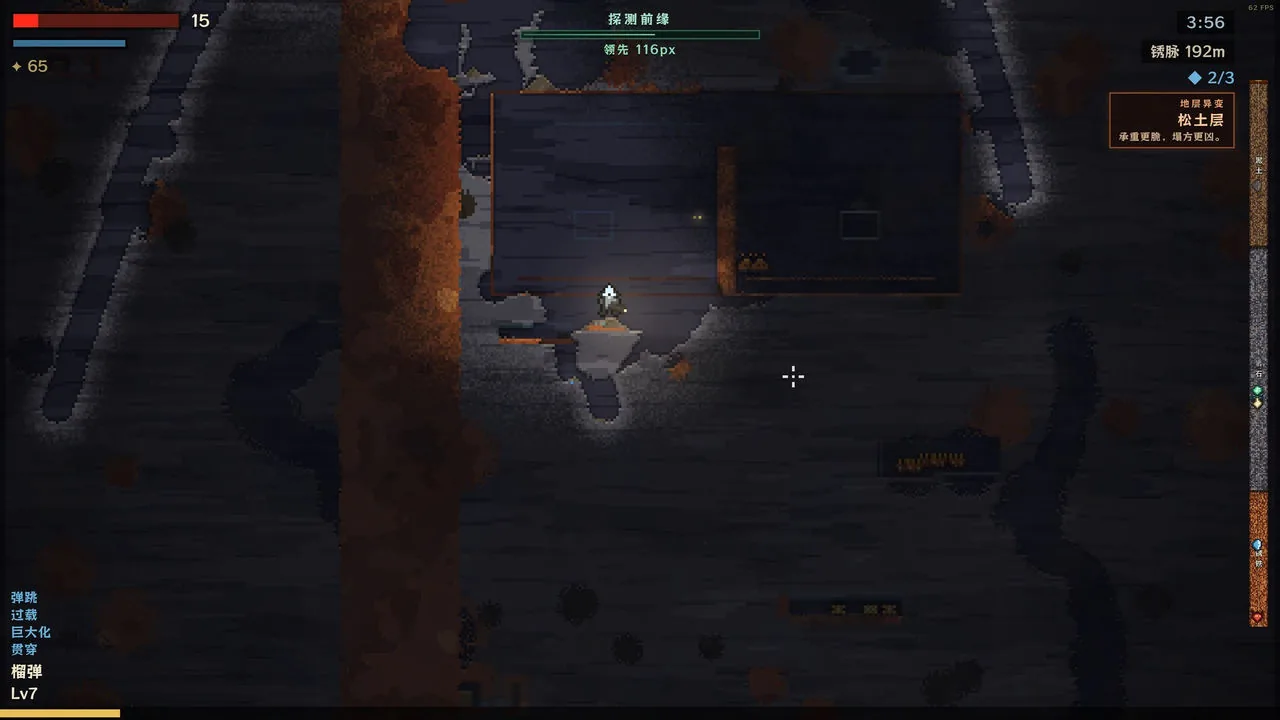
The descent is split into six buried ruins, and the page gives each layer four properties. Every one of the six layers has its own terrain materials, environmental reactions, enemy ecosystem and core boss, so the material you dig through and the threats inside it change layer by layer.
Progress between layers is gated by combat: only by reaching the bottom of a layer and defeating its core can you fall into the next ruin. The narrative wrapper is described too — the ruins and echoes in the strata tell of people who dug downward looking for somewhere to live, and the deeper you go, the harder it is to ignore the question of whether there is really a home beneath the earth.
Endings, Cataclysm Mode and Store Features
The endgame is named in one line: three endings, plus Cataclysm Mode after the ending. Nothing else about those endings or that mode is published — no conditions, no difficulty and no content description.
The platform feature list tells you what the game supports outside the loop. It marks Single-player, Steam Achievements, Custom Volume Controls, Adjustable Difficulty, playable at your own pace, playable without timed input, Stereo Sound, Steam Cloud and Family Sharing, and it lists no co-op, multiplayer, controller or level-editor entry.
What Is Not Published
The feature copy is specific about systems and silent about contents, so a number of expected tables simply do not exist in official data.
- Names, materials and maps for the six ruins.
- Weapon, payload and upgrade tables, plus any numbers behind them.
- Enemy and core boss names, and what each boss does.
- Completion time and difficulty tier list.
- Rules, unlock conditions and content for Cataclysm Mode.
- Any post-launch feature schedule or roadmap.
The loop in more detail is on How It Plays, the store and platform picture is on Availability, and the launch numbers are on Launch & Demo.
FAQ
What are the main DustFall features?
Fully destructible simulated pixel terrain, roguelite payload and upgrade builds, descent pressure from the surface scan and hunters, six layers with six core bosses, and three endings.
What makes the terrain different from other shooters?
The store text describes pixels that flow, burn, explode and collapse, so digging changes both the battle and the escape route rather than just removing scenery.
What is the three-way upgrade system?
Each descent lets you enhance your weapon, gain passive abilities, or switch payloads.
What is Cataclysm Mode?
The feature list names a Cataclysm Mode after the ending; its rules and unlock conditions are not published.
How many layers and bosses are there?
Six layers and six core bosses, each layer with its own terrain materials, environmental reactions and enemy ecosystem.
Are there other game modes?
Only Cataclysm Mode is named. The feature list is single-player, with no co-op, multiplayer or level-editor entry.
References
- Steam store page — DustFall
- Steam appdetails API (cc=us, l=en) — DustFall
- Steam news hub — app 5018940
Facts on this page are compiled from the references above. Items marked "to confirm" are single-source and not yet verified.