
Olympus 2249 · Additional · Guide
Olympus 2249 Features - Karmic Types, Dirty Combat and Dialogue
Olympus 2249 features from the store copy: the five Karmic Types, dirty turn-based combat, the flowing dialogue system and five peaceful specializations.
By the Gamebase team · Updated 2026-10-08
On this page (12)
- The four feature blocks on the store page
- Choose who you are: the Karmic Type
- Fight dirty: turn-based combat
- Do not underestimate a conversation
- Play with the systems: specializations and the toolbox
- What Early Access already includes and what comes later
- What are the main features of Olympus 2249?
- How does the Karmic Type system work?
- What makes the combat different from other turn-based RPGs?
- What are peaceful specializations?
- Which systems are already in the Early Access build?
- Is there anything the feature list does not explain?
Olympus 2249 advertises four named feature blocks on the Steam store page: choosing a Karmic Type, fighting dirty in turn-based combat, a conversation system that refuses the usual question menu, and five peaceful specializations backed by a wide systems toolbox. Everything below is a transcription of that store copy rather than a description from play experience, because the developer site field is empty and the listing is the only official source.
The four feature blocks on the store page
The long description is organised under four headings, and each one claims a different axis of the game. The headings themselves are useful shorthand for what the studio chose to lead with.
| Store heading | What it claims |
|---|---|
| Choose who you are | A five-way Karmic Type that shapes the whole playthrough |
| Fight dirty | Turn-based combat driven by positioning and battlefield hazards |
| Do not underestimate a conversation | Dialogue that flows like a real conversation and carries consequences |
| Play with the systems | Five peaceful specializations plus a deep systems toolbox |
Those four blocks sit under a positioning sentence describing a single-player, turn-based cRPG set in a post-nuclear dieselpunk America, with meaningful choices, branching dialogue and brutal, bloody battles.
Choose who you are: the Karmic Type
Your Karmic Type is one of five and shapes the entire playthrough. You start as a Moralist, an Asshole, or somewhere in between, and that starting point changes how people react to you, which dialogues you get, which quests you are offered and which opportunities open up.
Karma also shifts with your choices, so the type is a starting position rather than a locked class. The copy sums that up by saying the person who starts the story does not have to be the person who finishes it.
The costs of the system are stated plainly: a faction that will not take you in, and a quest you will never be offered. Because those are route-level locks rather than dialogue flavours, the five types function as content filters and a single run cannot see all of the game.
Fight dirty: turn-based combat
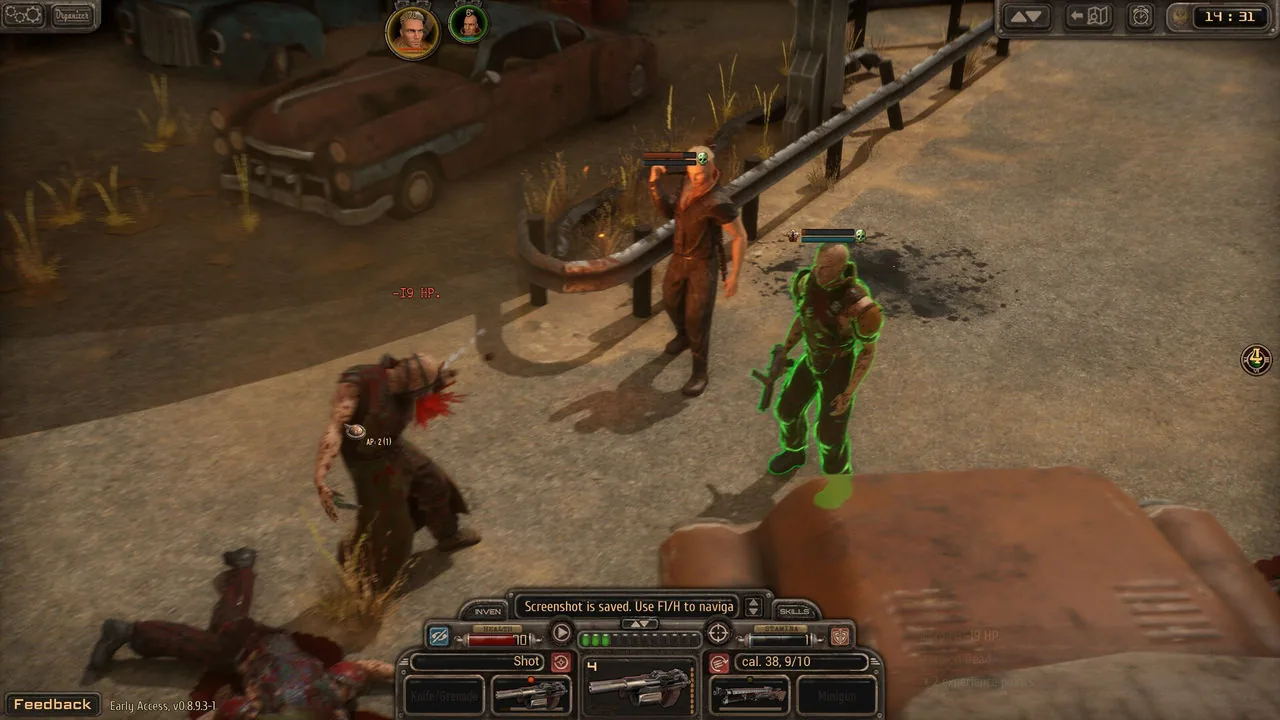
Combat is turn-based, and the copy opens by telling you to take your time. Positioning comes first, then the battlefield itself becomes the weapon: kick a fuel barrel toward an enemy and blow it up, or set an oil spill ablaze.
Electricity and traps are listed as further tools, described as whatever else the battlefield hands you. Shots can be aimed at arms, legs or the head, and Stamina is spent on special combat abilities rather than on ordinary actions.
The design intent is stated in one line: hard fights are puzzles with more than one correct solution. That framing matches the absence of any documented turn timer and the presence of Save Anytime and Adjustable Difficulty in the feature list.
Do not underestimate a conversation
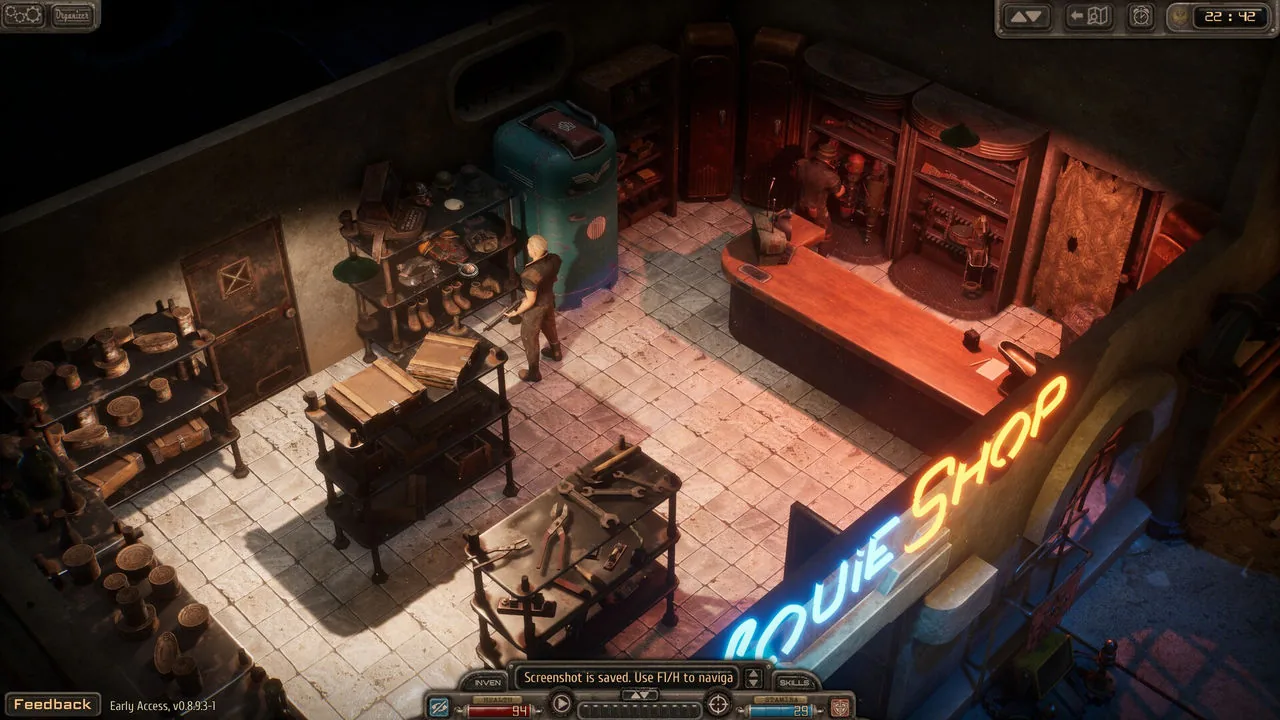
The dialogue system is pitched against the standard RPG interrogation menu. The copy promises no endless lists of tell-me-about questions and says every conversation flows like a real one.
You are free to say exactly what you want, and the copy notes that this is sometimes the smart move. It also warns about the cost, using the same two examples as the Karmic Type section: a faction that will not take you in and a quest you will never be offered.
Quests follow the same logic. They are described as built around using your skills and systems, rarely asking you to just kill someone, with even the simplest fetch quest framed as an invitation to a small adventure.
Play with the systems: specializations and the toolbox
Five peaceful specializations are available, and each one unlocks new dialogue options and new ways to solve problems. The short description makes the same promise from the other direction: fight turn-based battles, or solve problems without firing a shot.
The Early Access build is described as already containing the full toolbox:
- Crafting for gear and items.
- Stealth as an alternative approach.
- Desert storms that reshape the gameplay while active.
- Hazardous environments including radiation and poison zones.
- A day and night cycle, with NPCs following their own daily routines and their own beds.
- An armor system.
- Dismemberment, also flagged in the content note.
- Procedural enemy and loot generation for random encounters and raids.
The Early Access answers state that all game mechanics are already implemented and balanced for different playstyles, while the balance of the RPG, combat and economy systems is what the Early Access period is meant to refine.
What Early Access already includes and what comes later
The current build is said to include all planned systems and the first of the three story acts the studio has in mind, with about a quarter of the story present and a playthrough running roughly 3 to 7 hours.
The full version is planned to add significantly more locations, factions, quests, characters and items, while existing mechanics keep receiving balance changes and quality-of-life improvements. No counts and no dates accompany that plan.
That is where the feature claims stop. There is no faction list, no skill tree, no recipe count, no Stamina cap, no enemy count, no ending count and no difficulty tier name in the official record, and the world name that appears in one achievement is never explained.
The published feature list is turned into store facts on the Cheat Sheet, the mechanics are covered page by page on How It Plays, and the launch status is on Launch and Demo.
FAQ
What are the main features of Olympus 2249?
Five Karmic Types that reshape the playthrough, turn-based combat built on positioning and battlefield hazards, a flowing dialogue system and five peaceful specializations.
How does the Karmic Type system work?
You pick one of five types, starting as a Moralist, an Asshole, or in between, and it changes how people react to you, which dialogues, quests and opportunities you get, and how karma shifts.
What makes the combat different from other turn-based RPGs?
The store copy emphasises battlefield objects such as fuel barrels and oil spills, aimed shots at arms, legs or the head, Stamina-powered abilities, and fights framed as puzzles with more than one solution.
What are peaceful specializations?
Five non-combat specializations, each unlocking new dialogue options and new ways to solve problems, so a run can lean entirely on words instead of weapons.
Which systems are already in the Early Access build?
Crafting, stealth, desert storms, radiation and poison zones, a day and night cycle with NPC routines, an armor system, dismemberment and procedural enemy and loot generation.
Is there anything the feature list does not explain?
Yes. No faction list, skill tree, recipe count, stamina cap or ending count is published, and the full-version additions are described only as a significant increase.
References
- Steam store page — Olympus 2249
- Steam appdetails API (cc=us, l=en) — Olympus 2249
- Steam news hub — app 5094490
Facts on this page are compiled from the references above. Items marked "to confirm" are single-source and not yet verified.