
Fell & Sell · How It Plays · Guide
Fell & Sell Gameplay - Controller Support in the Dungeon
Fell & Sell gameplay facts: the descending dungeon and its unbanked haul, the altars that rewrite a run, the living forest and the shop economy behind the loop.
By the Gamebase team · Updated 2026-10-06
On this page (11)
- The dungeon and the risk rule
- Altars, states and the runs that follow
- Between runs: gear, quests and decor
- The shop side and the pricing rule
- Controls and the published input tags
- Where to go next
- How does a run end?
- What do dungeon altars do?
- Is there a shop economy?
- Does decorating change combat?
- Is Fell & Sell playable with a controller?
Fell & Sell gameplay is one loop played twice: fight down through a roguelike dungeon or out into the forest, then return and turn the haul into a shop. The store listing publishes the shape of that loop in some detail, and it tags full controller support for both halves.
The dungeon and the risk rule
The listing states the dungeon rule before it states anything else about combat. Floors descend, loot gets rarer the deeper you go, and if you die you lose your entire unbanked haul. That single sentence is what makes the run a decision rather than a grind, and the store text asks the question directly: do you secure the bag and head home, or risk it all for a legendary drop?
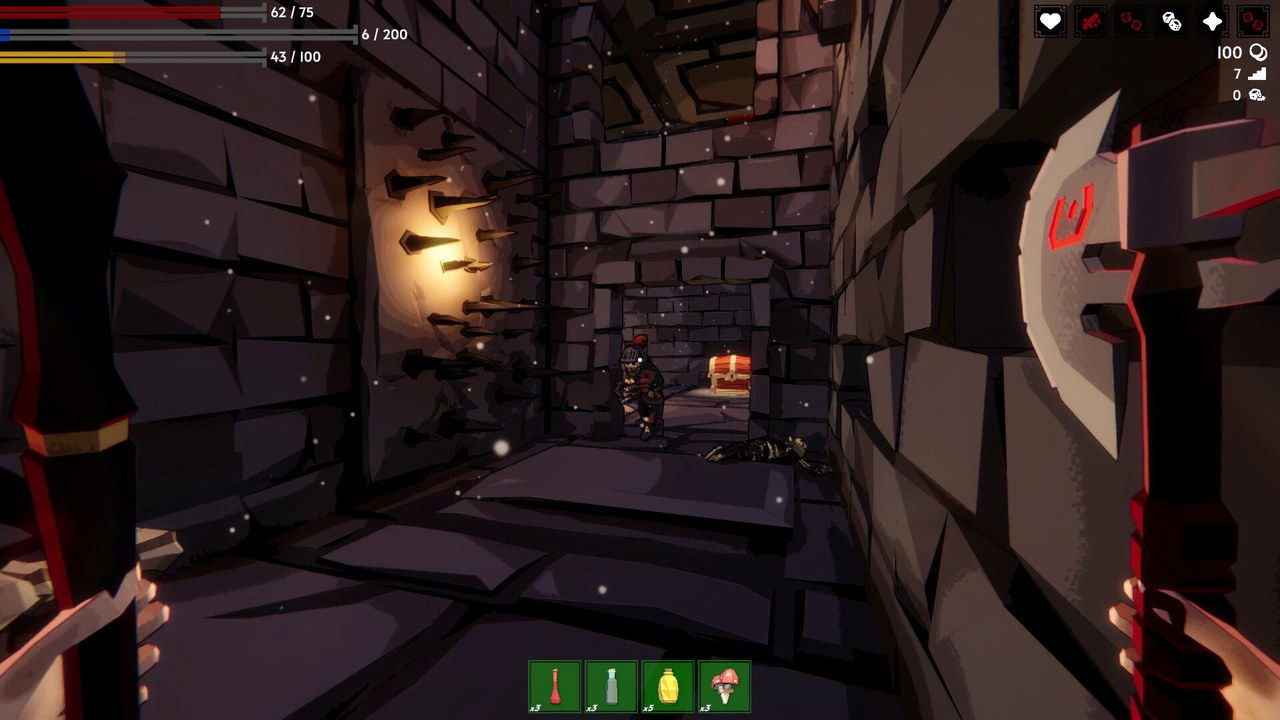
Combat itself is described as carving through hordes of skeletons and monstrous foes, in the first person, with weapons you forge between runs. No damage numbers, enemy list or weapon list is published.
Altars, states and the runs that follow
The listing says dungeon altars alter play radically. Three examples are given, and they are the only named systems of their kind on the page.
| Named altar effect | What the store text says it does |
|---|---|
| Shrink | Become tiny to dodge massive attacks |
| Midas Touch | Melt heavy items into gold |
| Mood cycling | Cycle through manic and depressed combat states to keep enemies guessing |
Outside the dungeon, the store text describes the living forest as having a mind of its own, with goblin raiding parties, sudden thunderstorms and the chaos of psychedelic mushroom season. Adapting on the fly is the stated skill there.
Between runs: gear, quests and decor
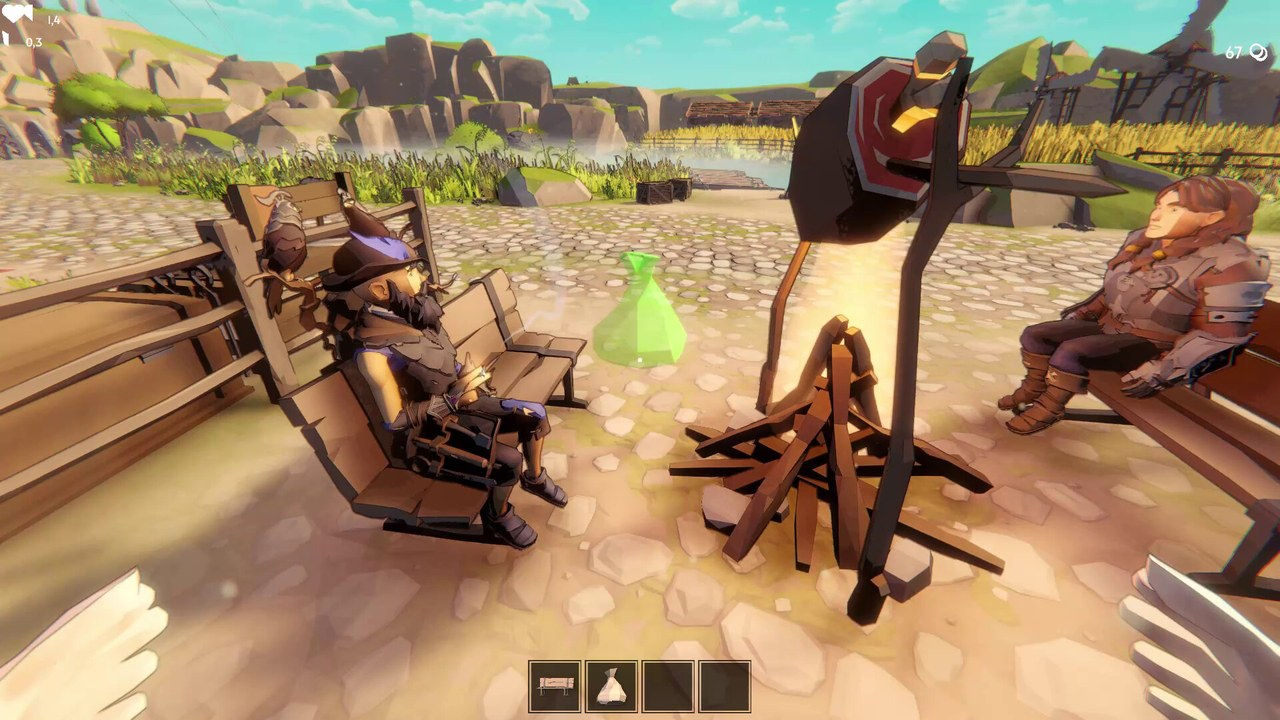
Everything after a run happens at the cabin, and the listing treats each stop as a system rather than flavour text.
- Gear Up: forge stronger weapons and tougher armour so the next dive goes deeper
- Quest Board: turn feats achieved during an expedition into gold, gear and items
- Decorate (for Combat): build specialised decor; the right layout provides permanent combat buffs and lifts shop appeal
- Grow Your Business: reinvest profits to turn a roadside cabin into a mercantile powerhouse
The decor detail is the one that connects the two halves: interior design is explicitly not just cosmetic.
The shop side and the pricing rule
Pricing is described as the part most games skip. You control the tags, and you read the market to set prices against supply, demand, shop prestige and decoration bonuses. The stated failure modes are symmetrical: priced too high the goods gather dust, priced too low you go bankrupt.
That is the whole published economy. No item list, no price bands and no demand formula are given, so the shop half cannot be broken down further from official material.
Controls and the published input tags
The listing's control statement is one tag: full controller support, alongside separate DualShock and DualSense entries. Stereo sound, custom volume controls and playable-without-timed-input are tagged as well. No rebinding options are published.
Where to go next
The launch facts are on Launch & Demo, the platform and build details are on Availability, and the condensed numbers are on the Cheat Sheet.
FAQ
How does a run end?
With a trip back to the cabin, or with death, which the store text says loses your entire unbanked haul.
What do dungeon altars do?
The listing names three effects: shrinking to dodge attacks, a Midas Touch that melts heavy items into gold, and cycling through manic and depressed combat states.
Is there a shop economy?
Yes. You set price tags based on supply, demand, shop prestige and decoration bonuses, per the store text.
Does decorating change combat?
Yes. The store text says the right furniture layout provides permanent combat buffs and boosts shop appeal.
Is Fell & Sell playable with a controller?
The listing tags full controller support, with DualShock and DualSense support named separately.
References
- Steam store page — Fell & Sell
- Steam appdetails API (cc=us, l=en) — Fell & Sell
- Steam news hub — app 4627110
Facts on this page are compiled from the references above. Items marked "to confirm" are single-source and not yet verified.